Off-Plan Mortgages in the UAE: How They Work in 2026

Updated September 3, 2026 · 9 min read · Sources: UAE Central Bank mortgage regulations (Circular 31/2013), ADREC, Aldar and ADCB (September 2026), Emirates NBD and Dubai Holding (April 2026), DLD.
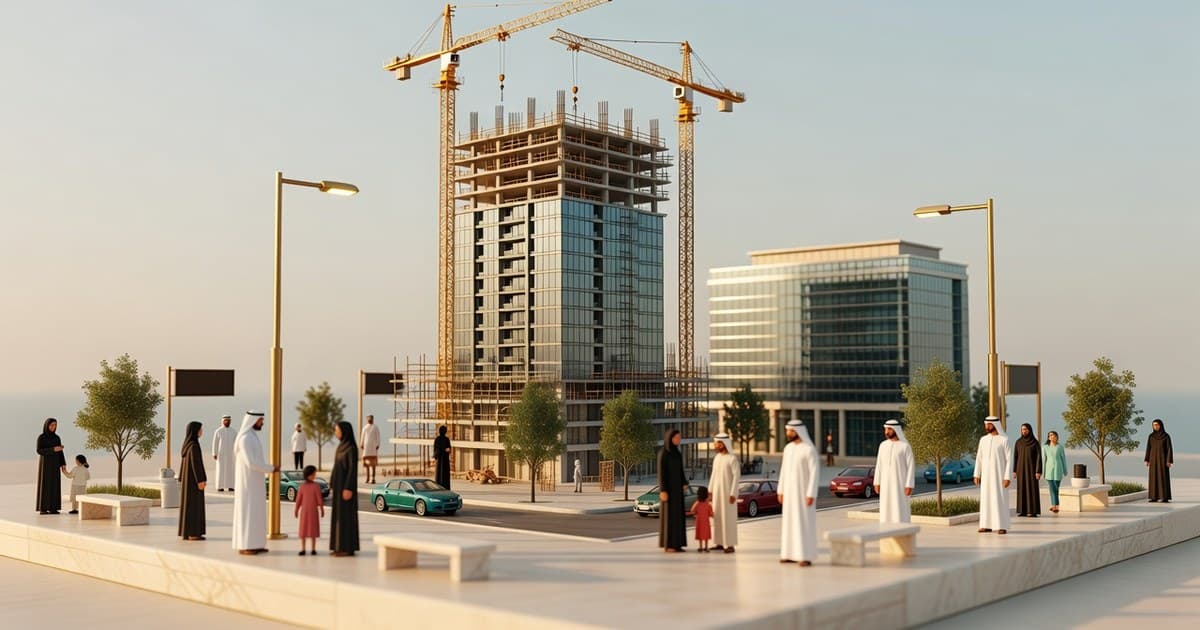
What changed in September 2026
Aldar has completed Abu Dhabi’s first off-plan mortgage under a new framework from the Abu Dhabi Real Estate Centre, with ADCB as the bank. The framework lets a bank’s interest in an off-plan unit be recorded in the emirate’s interim real estate register before handover. In practice: a buyer who has paid 50% of the purchase price can arrange a mortgage against the unit, and the bank funds the remaining instalments and the final handover payment.
Until now, an off-plan buyer in Abu Dhabi carried every instalment in cash and only arranged a mortgage at completion, when the title deed existed to secure it. The new route fixes the financing early: you know your rate and your monthly figure while the building is still going up, you keep more of your cash through construction, and the handover payment is the bank’s to make rather than a cheque you have to find on the day.
Aldar is running it through Home Finance by Aldar, its in-house advisory, at no fee, with more than six banks on the panel: ADCB, Abu Dhabi Islamic Bank, Dubai Islamic Bank, Emirates NBD, Emirates Islamic and First Abu Dhabi Bank. Other Abu Dhabi developers are expected to follow, since the framework belongs to ADREC rather than to Aldar.
The rule underneath everything: 50%
The UAE Central Bank’s mortgage regulations set the ceilings every bank works inside, and for off-plan property the ceiling is simple. A loan against a property under construction may not exceed 50% of its value, whether you are a UAE national, an expatriate resident or a non-resident, and whatever else you own. That is why every off-plan route, in either emirate, starts with you having paid half.
Compare the completed-property ceilings and the logic is obvious. An expatriate buying a first home under AED 5 million can borrow up to 80%, a UAE national 85%. Above AED 5 million the caps fall to 70% and 75%, and a second or investment property is capped at 60% for expatriates and 65% for nationals. Off-plan carries construction risk, so the regulator keeps the bank’s exposure to half.
Two more Central Bank rules size the loan. The total mortgage may not exceed 7 times your annual income (8 times for UAE nationals), and your total monthly commitments after the mortgage must stay under 50% of your income, tested at a rate two percentage points above the one you are offered. The loan runs for 25 years at most and has to be repaid by age 65 for salaried borrowers, or 70 for the self-employed.
Abu Dhabi: the ADREC framework, step by step
The sequence under the new framework runs like this. You book the unit and pay the deposit and the 2% ADREC registration fee, and the sale is registered in the interim register. You pay the developer’s instalments in cash until you have paid 50% of the price. At that point a bank on the framework can be registered against the unit; the bank then pays the developer each remaining instalment as it falls due and funds the handover payment, and you start paying the mortgage instead.
You do not have to wait until 50% to talk to the bank. Pre-approvals typically hold for 12 months and can be renewed until handover, so the sensible move is to get pre-approved at booking, which fixes the affordability and the rate structure, and draw the loan the day you cross the line.
What the Abu Dhabi route does not do is change the Central Bank ceiling. The bank is funding at most the half you have not paid, and only what your income supports. If 50% of the price is more than 7 times your annual income, or the repayment at a stressed rate pushes your commitments over half your salary, the loan is smaller and the difference stays with you.
Dubai: approved projects and construction stages
Dubai has had off-plan mortgages for longer, on a different footing. Your ownership before handover is recorded in Oqood, the Dubai Land Department’s interim register, and a bank lends against that registration. Banks maintain approved developer and project lists, so not every tower qualifies, and they usually want the project at least 40% complete before funding begins, with the buyer having paid 50%.
The model announced by Emirates NBD and Dubai Holding Real Estate in April 2026 lowers the construction gate to 30% for projects across Meraas, Nakheel and Dubai Properties, with the same 50% paid rule, and folds the mortgage into the purchase journey from booking. ADCB launched its own off-plan mortgage the same month, financing up to 50% on projects from leading developers, with pre-approvals valid for 12 months and renewable to handover and launch rates from 3.49% fixed for three years. Mashreq, Dubai Islamic Bank and Arab Bank also run off-plan or developer tie-up products.
How the money moves is the same as Abu Dhabi: the bank does not release the whole loan on day one. It pays the developer tranche by tranche as instalments fall due against the project’s escrow-linked schedule, and the final handover payment is the last tranche.
What it costs
The purchase fees are paid at booking whether or not you ever take a loan: 4% to the Dubai Land Department in Dubai, 2% to ADREC in Abu Dhabi, plus the developer’s administration fee. The mortgage adds its own layer. Mortgage registration is 0.25% of the loan amount, plus AED 290 in Dubai. A bank valuation runs around AED 3,000. Banks quote an arrangement fee of up to 1% of the loan, though launch offers on off-plan products have been waiving it. In Abu Dhabi the ADREC trustee charges AED 1,575 for a transfer with a mortgage.
On the loan itself, rates in 2026 sit in a band from the low threes for a short fixed period to the mid fours variable, and the fixed period matters more than the headline. A three-year fix taken at 40% built expires roughly when you move in, which is when you want the option to refinance against the completed title. Ask what the rate reverts to, and what the early settlement fee is, before you sign.
One cost people forget: while the bank is paying instalments, you are paying the mortgage on money already drawn, and you may still be renting. Budget for the overlap between the first drawdown and handover.
Who qualifies, and who does not yet
A salaried resident in their thirties or forties, buying on a payment plan with a major developer, is the buyer these routes were built for. The checker on this site runs the three caps for you: 50% of price, the income multiple and the debt burden at a stressed rate, and tells you whether the door is open now or how much more you need to pay to reach it.
Non-residents can use the same rules on paper, but only a few banks finance off-plan before handover for buyers without a UAE income, and most prefer to lend at completion. It is done case by case, usually with a larger cash share. Self-employed buyers get the longer age limit but face closer scrutiny of income, typically two years of audited accounts and bank statements.
The project matters as much as the borrower. A bank will only register against a unit in a project it has approved, in an emirate whose register supports it. In Abu Dhabi that currently means Aldar under the ADREC framework, with other developers expected to join. In Dubai it means the bank’s list, which every major developer sits on and many smaller ones do not.
The order to do things in
Get pre-approved before you book, or at booking at the latest. It costs nothing, it fixes what you can afford, and it holds for a year. Choose the project with the bank in mind: a launch from a developer on the approved lists keeps the mortgage route open; a boutique developer may leave you funding every instalment yourself. Pay the instalments on time, because a missed instalment shows up in the register the bank reads. When you cross 50% paid, and in Dubai the building crosses its stage, draw the loan and let the bank take the schedule.
We arrange off-plan mortgages across the framework banks at no fee to you, and we know which projects each bank will and will not fund this month. Run the checker first, then send us the result.
Related questions
What is an off-plan mortgage?
A home loan that funds part of a property purchase before the building is complete. The bank pays the developer’s remaining instalments and the handover payment as they fall due, and you repay the bank. The Central Bank caps it at 50% of the price.
What is the ADREC off-plan mortgage framework?
An Abu Dhabi Real Estate Centre route, first used by Aldar and ADCB in September 2026, that records a bank’s interest on an off-plan unit in the interim register before handover. Once the buyer has paid 50% of the price the bank funds the remaining instalments and the handover payment.
How much can I borrow on an off-plan property?
The lowest of three figures: 50% of the price, 7 times your annual income (8 times for UAE nationals), and the loan that keeps your monthly commitments under 50% of income at a rate stressed two points above the offer.
When can the bank start paying my instalments?
When you have paid 50% of the price. In Dubai the project must also have reached the bank’s construction stage, usually 40% complete, or 30% for Nakheel, Meraas and Dubai Properties projects under the Emirates NBD model.
What does an off-plan mortgage cost on top of the purchase fees?
Mortgage registration of 0.25% of the loan (plus AED 290 in Dubai), a valuation of around AED 3,000, a bank arrangement fee of up to 1% that launch offers often waive, and in Abu Dhabi the ADREC trustee fee of AED 1,575 for a transfer with a mortgage.
Can a non-resident get an off-plan mortgage in the UAE?
The rules allow it, but only a few banks lend to non-residents before handover and most prefer to lend at completion, usually with a larger cash share. It is arranged case by case.