It Costs a Third More to Build Dubai Than It Did in January

Published August 30, 2026 · 5 min read · Source: Dubai Statistics Center, monthly average prices of construction materials, January to June 2026. Analysis: Equity Edge. The full chart and all 24 materials are on our Demand Dashboard.
What the official numbers show
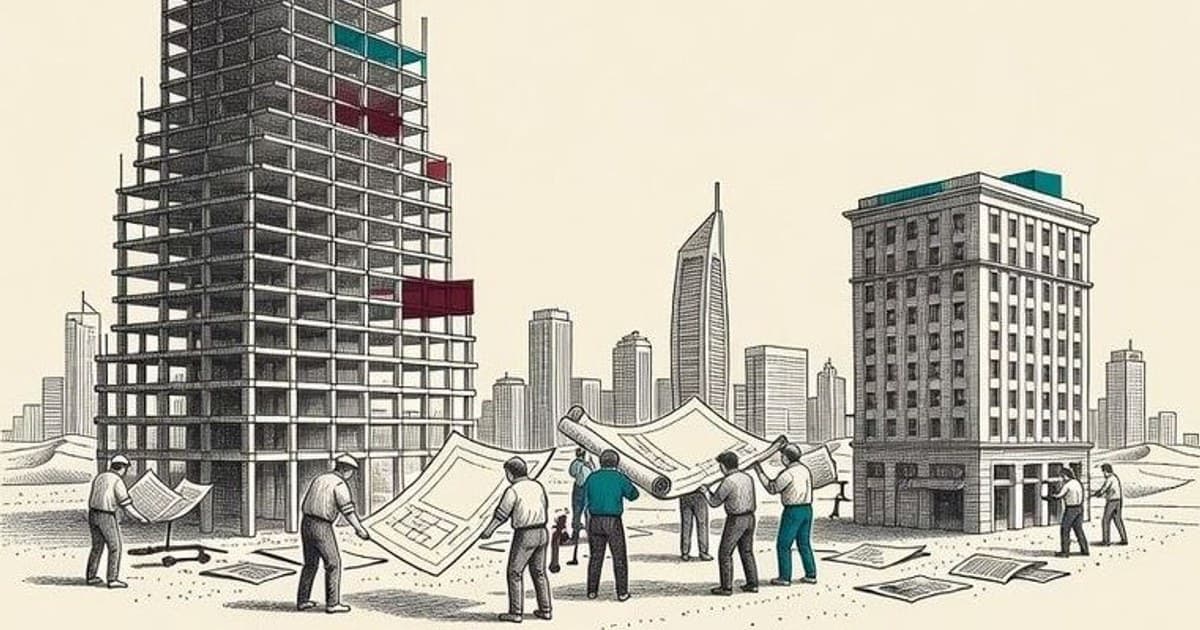
The Dubai Statistics Center publishes monthly average prices for the materials the city is built from, and the first six months of 2026 read like a market under pressure. Gypsum went from AED 7.70 to AED 16.45 a bag, up 114%, including a 47% jump in May alone. Ready-mix concrete rose from AED 315 to AED 426 per cubic metre, up 35%. Steel reinforcement bars climbed 28% to AED 3,224 a tonne, steel mesh as much as 40%, and concrete blocks between 25% and 31% across every size.
May was the inflection month: steel, concrete and blocks all posted their biggest single monthly jumps in April and May, which is when a construction pipeline running hot starts outbidding itself for materials.

Why this is a boom signal, not inflation
The tell is what did not move. Lime was flat at exactly 0%. White cement rose 0.7%. Red sand 1.6%. If this were general inflation, currency weakness or an energy shock, every material would drift upward together. Instead the surge is concentrated entirely in structural materials, the things you pour foundations and stand towers with, while the finishing basics stayed still.
That pattern has one common cause: demand. Dubai launched record volumes of off-plan projects through 2025 and 2026, and all of them are now hitting the construction phase at once. More concrete being poured than the supply chain can comfortably feed is exactly what these six months of data look like.
What it means for property prices
Construction costs feed forward with a lag, through three channels. Developers launching new projects in the second half of 2026 are pricing against materials 25 to 35% dearer than January, which puts upward pressure on launch prices. Developers mid-build on projects sold at 2024 and 2025 prices are watching their margins compress, which in practice means slower spec upgrades and harder negotiations with contractors, and in the worst cases, delays. And every finished building in the city just became roughly a third more expensive to replace, which is quiet structural support under ready-market prices.
None of this shows up on a listing portal. It shows up 12 to 24 months from now, in what new launches cost and in how firmly owners of completed stock hold their asking prices.
The smart window: 12 to 18 months from handover
Here is the practical conclusion. A project within 12 to 18 months of handover has already procured most of its structure: the steel is up, the concrete is poured, and those costs were locked at earlier prices under contracts signed before this surge. The buyer of that unit is not paying for 2026 materials. A project launching today has to buy every bag of gypsum at the new prices, and its launch price will say so.
So in a rising-cost market, it would be advisable to buy a project that is within 12 to 18 months of handover: most of these costs are already borne, the delivery risk window is short, and the price was set against last year’s build costs while the replacement cost around it rises. Our launch calendar on the new-launches page shows exactly which projects sit in that window, and the registered numbers behind any of them are a WhatsApp message away.
Related questions
Why are construction costs rising in Dubai?
Demand. The surge is concentrated in structural materials (steel up 28%, concrete 35%, blocks up to 31%, gypsum 114% in six months) while finishing basics like lime and white cement stayed flat. That split points at Dubai’s record off-plan pipeline hitting the construction phase at once, not at general inflation, which would lift everything together.
Will rising construction costs push Dubai property prices up?
With a lag, yes, through three channels: new launches must price in materials 25 to 35% dearer than January, developer margins on already-sold projects compress, and the replacement cost of every finished building rises, which supports ready-market prices. The effect lands over 12 to 24 months rather than overnight.
Is it better to buy off-plan early or close to handover right now?
In a rising-cost market, the 12-to-18-months-from-handover window has the best of it: the project’s structural materials were bought before the surge, so those costs are already borne, the wait is short, and the price was set against last year’s build costs. Brand-new launches carry today’s material prices in their launch pricing.
Which projects are within 12 to 18 months of handover?
Our launch calendar on the new-launches page groups every tracked project by handover date, so the 12-to-18-month window is visible at a glance, and each project page carries the registered data behind it. Ask us for the honest read on any specific one.