Abu Dhabi’s AI build-out: what Stargate UAE means for property

Published August 9, 2026 · 4 min read · Sources: OpenAI and G42 announcements, Microsoft investor communications and UAE investment announcement (November 2025), Reuters, The National, Statistics Centre Abu Dhabi (SCAD), ADREC
What was announced
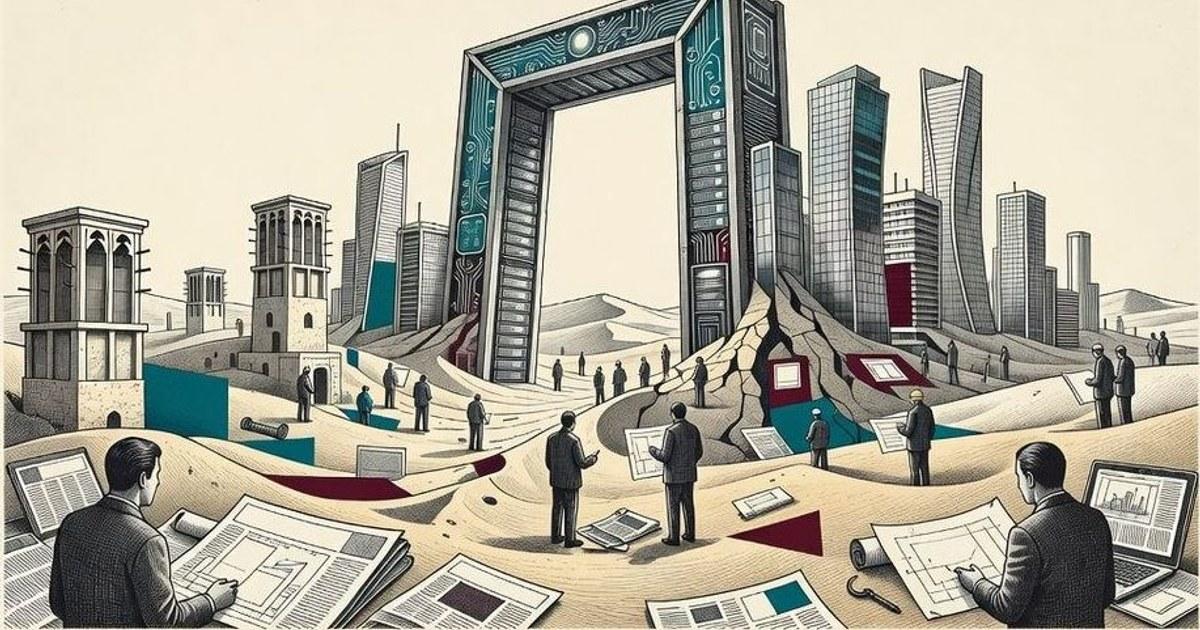
Stargate UAE is a planned gigawatt-scale AI data-centre campus in Abu Dhabi, announced by OpenAI and G42 in May 2025 with partners across the compute supply chain. It followed Microsoft’s $1.5 billion investment in G42 in 2024. The direction is explicit: Abu Dhabi as the AI hub of the region.

Why a data centre moves house prices
The building itself employs relatively few people. What matters is everything that anchors around committed infrastructure at this scale: engineering teams, research groups, vendors, founders and the capital that follows them. These are high-income households signing leases and, a few years later, buying.
The pattern to expect
Tech-anchored demand lands in a familiar order. Corporate leases and serviced stock move first, family rentals near international schools follow, and purchases come last as relocations turn permanent. Abu Dhabi’s supply discipline makes the effect sharper than it would be in a market that answers every demand signal with ten new launches.
Where the build stands in October 2026
The first milestone is a 200MW phase of the 1GW Stargate UAE cluster, which OpenAI said in May 2025 would go live in 2026. In December 2025 Mubadala’s Khaldoon Al Mubarak narrowed that to the third quarter of 2026. The cluster is being built by G42 through its Khazna data centre business and operated by OpenAI and Oracle, with Nvidia, Cisco and SoftBank as partners, inside a planned 5GW UAE-US AI Campus first presented as a single 10-square-mile site in Abu Dhabi. In September 2026 Reuters reported that the wider campus is now likely to be spread across a network of data centres around the UAE, as part of an infrastructure resilience push. G42 said work was progressing as planned and that the project’s specifics are subject to continuous review. Coverage of the report still described the first 200MW as due to come online in 2026. For property, that detail matters. A campus split across several sites spreads the physical footprint, so the housing case rests less on one plot of land and more on the offices, labs and partners that base their people in the capital.
| When | What happened |
|---|---|
| 2024 | Microsoft invests $1.5 billion in G42 |
| May 2025 | Stargate UAE announced: a 1GW cluster within a planned 5GW UAE-US AI Campus |
| November 2025 | Microsoft sets out $15.2 billion of UAE investment for 2023 to 2029 |
| December 2025 | Mubadala points to the third quarter of 2026 for the first 200MW |
| September 2026 | Reuters reports the 5GW campus is likely to be spread across several UAE sites |
The money around the campus
The compute is the visible part. The bigger signal for housing is how much capital is being committed to people and operations in the country. In November 2025 Microsoft’s president, Brad Smith, set out $15.2 billion of investment in the UAE between 2023 and 2029. About $7.3 billion of that was spent or committed by the end of 2025: the $1.5 billion stake in G42, more than $4.6 billion in AI and cloud data-centre infrastructure and $1.2 billion in local operating expenses. Roughly $7.9 billion more is planned for 2026 to 2029, and Microsoft has also pledged to train one million people in the UAE by 2027. Operating expenses are the line we care about: local operating spend is the part most likely to mean people on the ground, and it tends to recur in a way a one-off equipment order does not. When we read an announcement like this, we separate the infrastructure spend from the local operating spend, because the second is what ends up as tenancy contracts.
What the registered market already shows
The capital was already growing fast before Stargate UAE was announced, and the registered market has accelerated since. Statistics Centre Abu Dhabi put the emirate’s population at 4.14 million in 2024, up 7.5% in a year and up from 2.7 million in 2014, with the Abu Dhabi region itself growing fastest at 8.8%. ADREC recorded a record AED 142 billion of real estate transactions in 2025, up 44%, and then AED 117 billion in the first half of 2026 alone, up 112% on the same half a year earlier, including AED 86.1 billion of sales. Foreign direct investment into the market reached AED 13.8 billion in that half, more than in the whole of 2025. None of this can be credited to AI alone, and we do not try to. What it tells us is that the build-out is landing in a market already absorbing new residents and new capital, which is when a fresh employer cluster is most likely to show up in rents rather than disappear into vacancy.
The honest caveats
Announced campuses take years to energise, and headcount forecasts are not tenancy contracts. We treat the AI build-out as one demand driver among several, alongside ADGM, tourism and the cultural district, and we track it the same way: through ADREC registered transactions, not press releases.
Related questions
When does Stargate UAE go live?
The first 200MW phase was announced to go live in 2026, and Mubadala’s Khaldoon Al Mubarak later pointed to the third quarter of 2026. The rest of the 1GW cluster and the wider 5GW campus have no confirmed completion dates. Treat dates as developer guidance until commissioning is confirmed.
Which areas benefit first?
Senior hires cluster where commutes, schools and lifestyle line up: Al Reem, Saadiyat and Yas on current patterns. We check each against registered rents before recommending.
Is this priced in already?
Partly, announcements move sentiment quickly. Registered medians move more slowly, which is why we anchor advice to ADREC data rather than launch-week pricing.