Buying off-plan in the UAE: escrow, Oqood and fees, explained for 2026

Updated July 31, 2026 · 12 min read · Sources: DLD (Law 8/2007, Law 13/2008), ADREC, Dubai Legislation Portal
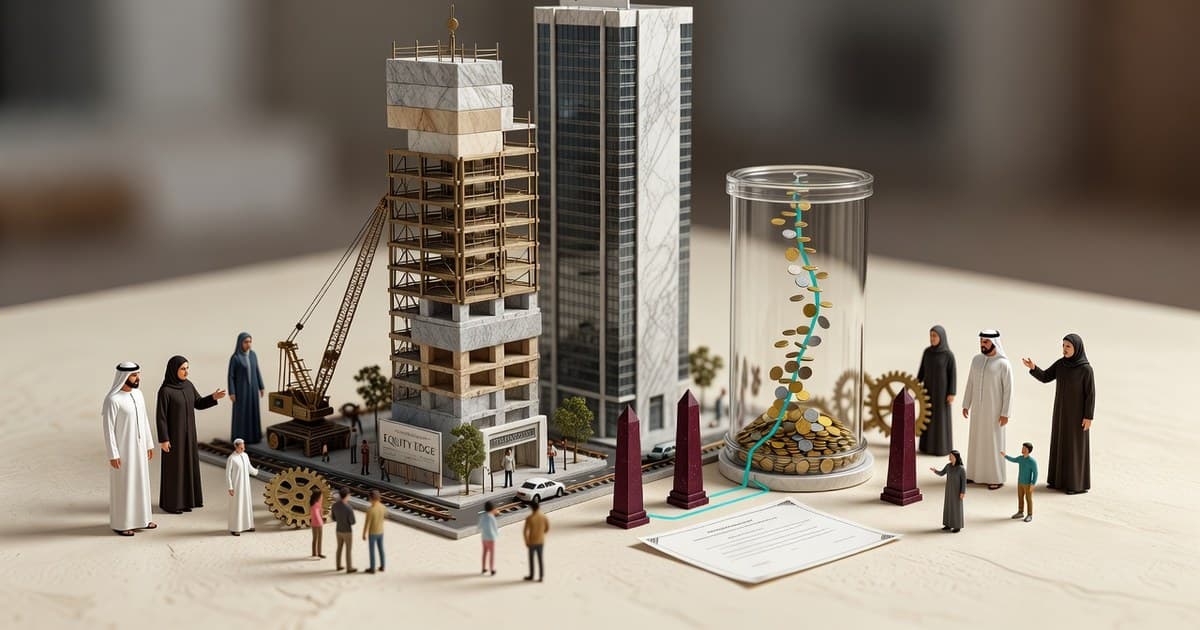
How escrow protects you
Dubai’s Law No. 8 of 2007 requires developers selling off-plan to deposit all buyer payments into a project-specific escrow account with a DLD-accredited bank. The funds are ring-fenced: they cannot be touched by the developer’s creditors and can only be spent on constructing that project, released in stages against construction progress certified by an approved engineer. The bank must also retain 5% of the project value for a year after completion as a defects buffer.

Abu Dhabi’s framework (Law No. 3 of 2015, tightened by 2025 regulations) goes further in one respect: developers cannot withdraw any escrow funds until construction is at least 20% complete and verified, early access is only possible for long-established developers posting a bank guarantee. Before you pay anything, in either emirate, verify the project’s registration and escrow account number on the DLD website / Dubai REST app or on DARI, and only ever pay into the named escrow account, never a personal or company account.
What Oqood is, and why it matters
Oqood ("contracts") is Dubai’s interim real-estate register for off-plan sales under Law No. 13 of 2008. Your Oqood certificate is your legal proof of ownership until handover, when it converts to a full title deed at no second transfer fee. The law is blunt about its importance: an unregistered off-plan sale is void, and you cannot resell or assign a unit that has no Oqood. Abu Dhabi’s equivalent is the Pre-Registration Certificate issued through DARI.
The full fee list, Dubai vs Abu Dhabi
| Fee | Dubai | Abu Dhabi |
|---|---|---|
| Government transfer/registration | 4% of price (DLD, at Oqood) | 2% of price (ADREC) |
| Registration admin | AED 40 Oqood + AED 20 knowledge/innovation | AED 2,000–4,000 by price band (DARI) |
| Developer admin fee | AED 1,000–6,000 typical | up to ~AED 5,000 typical |
| Agency fee (primary sales) | Usually none, developer pays | Usually none, developer pays |
| Mortgage registration (if financed) | 0.25% of loan + ~AED 290 | 0.1% of loan (min 500 / max 1,000) |
| Typical total on-costs | ~5–8% of price | ~3–4% of price |
The 4% DLD fee is legally split 2% buyer / 2% seller, but market convention is that the buyer pays all of it, unless the developer runs a "DLD waiver" promotion and absorbs half or all. It is charged on the full purchase price at registration, not on the instalments you’ve paid.
Payment plans in 2026
Down payments run 10–20% at booking. The common structures are 80/20, 60/40 and 50/50 (construction/handover), plus post-handover plans that leave 40–60% payable over 2–5 years after keys, usually interest-free. Construction-linked plans, where instalments trigger on certified milestones (foundation, structure, handover) rather than calendar dates, are the safer shape for buyers: if construction lags, so do your payments. Every instalment must legally flow through the escrow account.
If things go wrong: your rights
For significant unjustified delay, RERA can cancel a project’s registration, in which case the developer must refund buyers from the escrow account, with a special Dubai tribunal (Decree 33 of 2020) overseeing distribution for cancelled projects. Most SPAs allow the developer a 6–12 month grace period beyond the anticipated completion date; beyond that, buyers can pursue compensation or termination through the courts. Abu Dhabi’s 2025 rules add published refund timelines and compensation ratios for cancelled units.
If you stop paying, Dubai’s Law 19 of 2017 sets a sliding scale: the developer can retain up to 25% of what you’ve paid if the project is under 60% built, up to 40% between 60% and completion, after a 30-day DLD-supervised notice period. Know the scale before you commit to a plan you might not sustain.
Related questions
Can a developer legally take my payment to their own account?
No. Payments outside the registered escrow account breach Law 8 of 2007. Always verify the escrow account number with DLD (or on DARI in Abu Dhabi) and pay only into that account, this is the single most important check in an off-plan purchase.
Do I pay the 4% DLD fee again at handover?
No. The 4% is paid once at Oqood registration. When the project completes, your Oqood converts to a title deed without a second transfer fee.
What happens to my money if the project is cancelled?
RERA freezes the escrow account and refunds are distributed to buyers, in Dubai through the special tribunal for cancelled projects. This is precisely what escrow exists for, and why paying outside it is so dangerous.
Is a bigger down payment safer?
Not particularly, your protection comes from escrow and registration, not the amount paid. For investors, lighter early cashflow (e.g. construction-linked or 1%-monthly plans) usually wins, since developers rarely discount for front-loading.