Ghaf Woods: What 35,000 Trees Actually Means on the Ground

Updated November 16, 2026 · 6 min read · Sources: Majid Al Futtaim, The Royal Parks, Dubai Land Department
What is Ghaf Woods, and what is it actually selling?
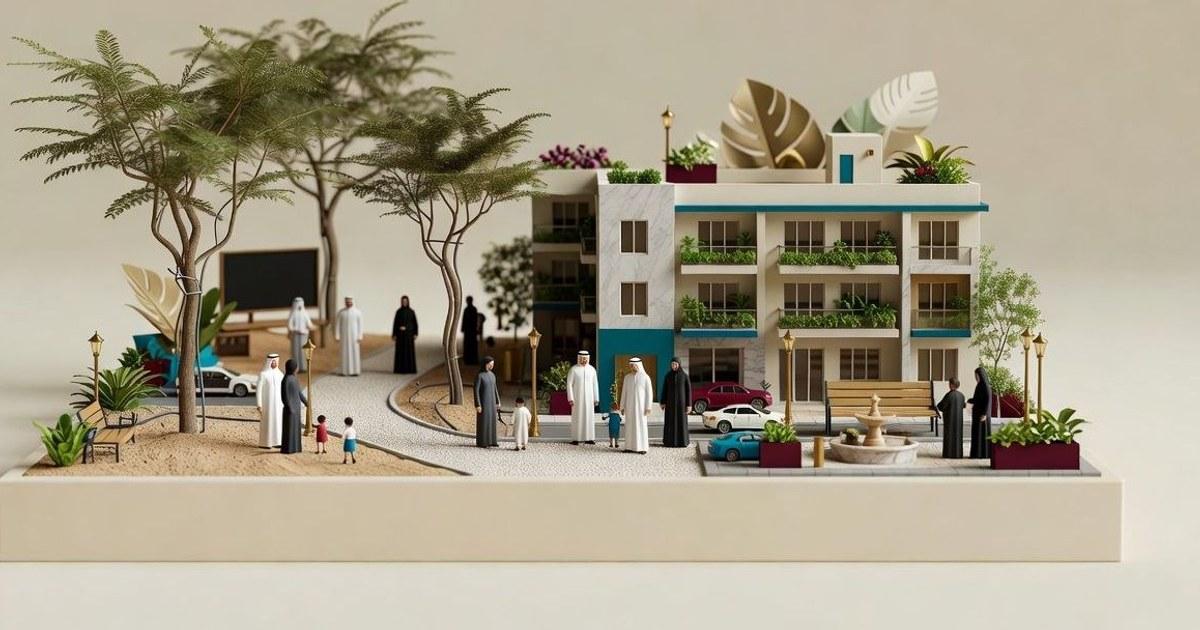
Ghaf Woods is a residential community in Dubai built around planting rather than a golf course, a marina or a beach. The developer is Majid Al Futtaim, and the pitch is forest living: apartment buildings set inside a landscaped woodland, with walking routes and shaded public space as the headline amenity rather than the view.
The number attached to it everywhere is 35,000 trees. That figure comes from Majid Al Futtaim's own project material, and it is doing a lot of work in the marketing. Our clients hear it, like the sound of it, and have no way of judging whether it is remarkable or ordinary.
So we did what we do with any headline number: we converted it into something measurable. A tree count on its own tells you nothing. Trees per hectare tells you how it will feel to walk through the place. That single conversion changes how you read the whole project, and it also changes the questions you put to the sales team.
This guide sets out the arithmetic, what it can and cannot prove, and what we would check before committing to an off-plan unit here.

Putting the Ghaf Woods tree count against Hyde Park
Hyde Park is a useful yardstick because almost everyone has a mental image of it. The Royal Parks records Hyde Park at about 142 hectares, with published tree counts for the park sitting at just over 4,000. Divide one by the other and you get roughly 28 trees per hectare. That is what a famous, genuinely leafy London park looks like in density terms, because most of Hyde Park is open grass and water, not canopy.
Ghaf Woods is a far smaller site, widely described as being around half the land area of Hyde Park. Take that as roughly 71 hectares and divide 35,000 trees across it, and you land in the region of 475 trees per hectare. That is approximately 17 times the Hyde Park figure.
The weak link in that sum is the land area, not the tree count. Gross master plan area, net developable area and landscaped area are three different numbers, and they are not interchangeable. If the true landscaped footprint is materially larger or smaller than the assumption above, the per hectare figure moves with it. The order of magnitude, though, holds: this is woodland density, not park density.
Ask Majid Al Futtaim for the master plan area in hectares and for the tree count by phase. Those two figures let you rerun the sum yourself for the part of the community your building actually sits in.
| Measure | Hyde Park, London | Ghaf Woods, Dubai |
|---|---|---|
| Land area | About 142 hectares | Around half of Hyde Park on the comparison used here |
| Trees | Just over 4,000 | 35,000 planned |
| Trees per hectare | About 28 | Roughly 475 |
| Relative density | Baseline | Approximately 17 times |
Will that density make it cooler, or the air cleaner?
This is the question every buyer asks next, and it deserves an honest answer rather than a brochure one. Shade from mature canopy lowers surface and air temperature in the space directly beneath it. That is well established in urban design generally. Whether it produces a measurable, community-wide temperature drop at Ghaf Woods is a different claim, and we have not seen a published study or developer measurement that proves it.
So treat the comfort benefit as a reasonable expectation, not a guarantee. On our reading, the realistic gain is on the ground: shaded walking routes, usable outdoor space in the shoulder months, lower glare and less heat radiating off hard surfaces. That is worth paying for. A quantified cut in your cooling bill is not something anyone can promise you today.
If cooling performance matters to you, ask the developer for specifics rather than adjectives. Species mix and projected canopy cover at maturity. Whether any microclimate modelling has been done for the master plan, and by whom. Which buildings are positioned to benefit from canopy shade on their western elevations. Those answers either exist or they do not, and the response itself tells you something.
How much of the forest will be there on handover day?
Renders show the community at maturity. You move into the community at year zero. That gap is the single most important thing to understand before you buy here, and it is where we spend most of our time with clients.
Trees are planted at a given size and grow from there. The ghaf, the UAE's native tree and the one the project is named for, is drought tolerant and slow growing. A young ghaf is not a canopy. Depending on planting size and species, a landscape designed for shade can take several years to start delivering it, and the first residents in a phase will see less of it than the last.
That is not a reason to avoid the project. It is a reason to price it correctly. If you are buying to live in it yourself, you are buying a landscape that improves every year you hold it. If you are buying to let it out on handover, your first tenant is renting a young plantation, not a forest, and the rent should reflect what exists rather than what is drawn.
Ask for the landscaping delivery schedule tied to each phase of handover. Ask what size the trees are at planting. Ask whether the public realm around your specific building is completed with your phase or with a later one. Those three answers shape the first three years of ownership.
What the green premium means for value and rent
A differentiated community can command a premium, and planting of this density is genuinely differentiated in Dubai. Our view is that the premium here is a slow one. It builds as the landscape matures and as the community proves it works in August, not in the first handover quarter.
So underwrite it conservatively. Compare the launch price per square foot with recent transacted prices per square foot in the surrounding Dubailand catchment, using Dubai Land Department transaction data rather than asking prices. If Ghaf Woods is priced at a significant premium to its neighbours on day one, you are paying upfront for a benefit that arrives over several years.
For rental underwriting, benchmark against comparable new apartment stock nearby rather than against the project's own positioning. Then treat any uplift from the landscape as upside you capture on renewal, not as income you can assume at first letting. That is how we model it for clients, and it keeps the investment case honest.
The questions we put to the developer
Every off-plan purchase comes down to what is contractually promised versus what is illustrated. With a landscape-led project, the gap between the two is wider than usual, because planting sits in the common areas rather than inside your unit.
Take this list to the sales appointment. Written answers are better than verbal ones, and anything that materially affects your decision belongs in the SPA or in the master plan documents attached to it.
| What to ask | Why it matters |
|---|---|
| Master plan area in hectares and trees planted per phase | Lets you check the density claim for your own phase |
| Tree sizes and species at planting | Determines how much shade exists at handover |
| Landscaping completion schedule by phase | Tells you whether your phase hands over into a building site |
| Position of your building on the landscape plan | Decides whether you overlook woodland or a car park |
| Any microclimate or canopy modelling carried out | Separates evidence from marketing on the cooling claim |
| Service charge budget and who maintains the planting | A 35,000 tree landscape has an irrigation and maintenance cost |
Your next step on a Ghaf Woods unit
The density figure is real and it is unusual. Roughly 475 trees per hectare against about 28 in Hyde Park is not a small difference, and it is the reason this project is worth taking seriously rather than dismissing as another green-branded launch. What it does not tell you is which building, which floor and which phase gives you the version of the community shown in the renders.
That is a building-level question, and it is answered by looking at the landscape plan next to the phasing plan, then checking both against the price you are being quoted.
Send us the building and unit you are considering. We will show you where it sits on the landscape plan, what is planted around it and when, and the exact questions we would put to Majid Al Futtaim before you sign. If the numbers do not stack up against comparable stock nearby, we will tell you that too.
Related questions
How many trees are there at Ghaf Woods?
Majid Al Futtaim's project material puts the planted tree count at 35,000 across the community. Ask the developer for the breakdown by phase, because that is what determines how much planting surrounds your own building at handover.
Is Ghaf Woods really greener than Hyde Park?
On density, yes. The Royal Parks records Hyde Park at about 142 hectares with just over 4,000 trees, roughly 28 trees per hectare. Ghaf Woods works out at roughly 475 per hectare on the comparison used here, about 17 times denser. Hyde Park is mostly open grass and water, which is why the gap is so wide.
Who is the developer of Ghaf Woods?
Ghaf Woods is developed by Majid Al Futtaim. All master plan, phasing and landscape documentation should come from the developer directly and be read alongside your sale and purchase agreement.
Will the trees be mature when I move in?
No. Planting starts at nursery size and fills in over several years, and the ghaf is a slow-growing native species. Ask for the planting sizes and the landscaping completion schedule for your phase so you know what exists on handover day rather than what appears in the renders.
Will Ghaf Woods actually be cooler than other Dubai communities?
Shade from mature canopy reduces temperature in the space beneath it, but we have not seen a published study or developer measurement quantifying a community-wide effect at Ghaf Woods. Ask whether any microclimate modelling has been carried out and by whom before you treat cooling as a priced-in benefit.
Is Ghaf Woods a good investment?
It depends on the entry price against comparable stock nearby. Benchmark the launch price per square foot against Dubai Land Department transaction data for the surrounding area, and treat the landscape premium as something that builds as the trees mature rather than income you can assume at first letting.