Service Charges in Dubai Explained, With Typical AED/sqft by Community

Updated September 5, 2026 · 9 min read · Sources: DLD service charge index and the Mollak system (Dubai Law 6 of 2019 on jointly owned property), RERA budget approval rules, 2026 service charge guides drawing on the DLD index (Luxhabitat, Driven Properties), Empower and Emicool district cooling tariffs as published.
What you are paying for
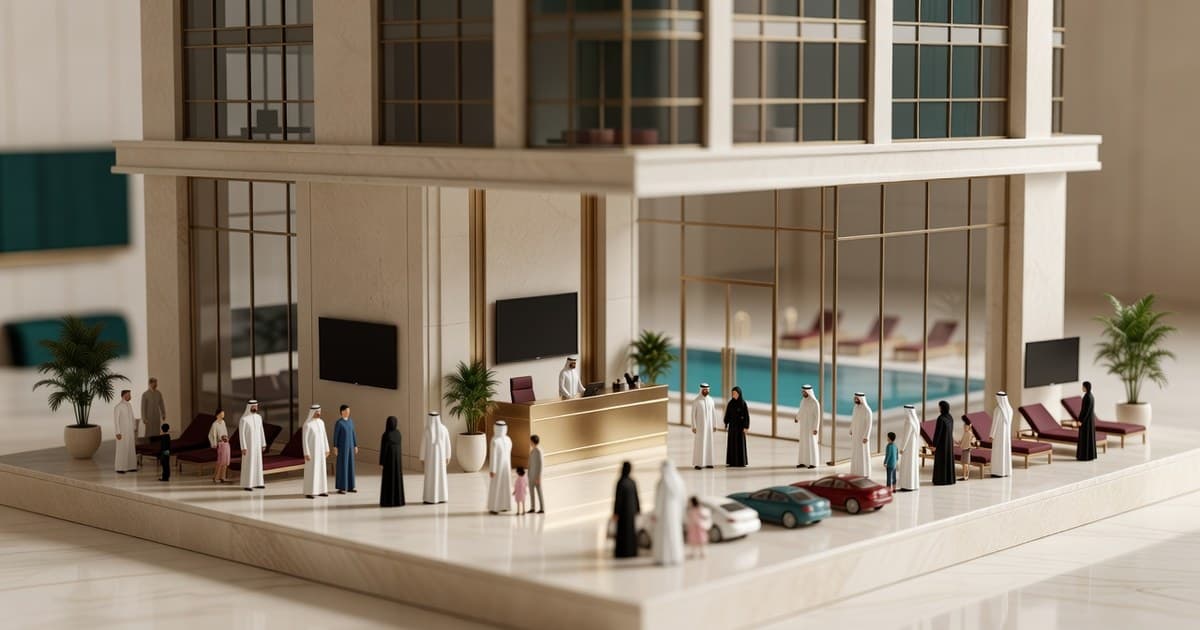
Own an apartment in Dubai and you own a share of the building around it: the lobby, the lifts, the pool, the gym, the corridors, the car park, the façade, the chiller plant and the land. Service charges are your share of what it costs to run and insure all of that for a year. Own a villa in a gated community and the list is shorter (the roads, the landscaping, the security gate, the parks and the community pool) which is why villa charges per square foot are a fraction of tower charges.
A typical tower budget breaks into management and administration, security, cleaning, maintenance contracts for lifts, fire systems and pumps, the pool and gym, landscaping, utilities for the common areas, building insurance, the district cooling capacity charge where the building is on a chiller network, and a contribution to the reserve fund. The invoice shows these lines, and the split tells you what kind of building you have bought: a heavy security and concierge line is a serviced tower, a heavy cooling line is an older building with an inefficient plant.
What it does not cover is anything inside your front door. Your own air-conditioning consumption, your DEWA, your appliances and your finishes are yours, and so is the interior maintenance a tenant does not carry.

Who sets the charge and who approves it
Dubai’s jointly owned property law (Law 6 of 2019) puts every building under a management entity: an owners’ committee with a licensed management company, the master developer for a community it still runs, or a hotel operator for a branded residence. That entity prepares an annual budget for the building. It does not get to invoice it until RERA, the regulatory arm of the DLD, has reviewed and approved it, and RERA benchmarks the budget against the service charge index for comparable buildings before it does.
The approved rate is expressed as a charge per square foot of your unit’s registered area, split into the general fund (the running costs) and the reserve fund (the sinking fund for major works). Your invoice is your area times that rate, usually in two or four instalments a year, and it is issued through Mollak.
Mollak is the DLD’s system for service charges, running since 2019. Every building’s budget, every owner’s invoice and every payment goes through it, and the money sits in a bank account under the DLD’s escrow-style supervision rather than in the management company’s own account. It exists because, before it, service charges were the least transparent cost in Dubai property, and it is the reason a buyer today can see exactly what a building charges before making an offer.
Typical charges in 2026
The DLD service charge index publishes the approved rate for every building, so the honest answer for any specific purchase is “look it up”. The ranges below are what 2026 market guides built on that index report across building types, and they are ranges, not quotes.
| Property type | Typical annual charge | Examples |
|---|---|---|
| Mid-market apartment towers | AED 10 to 13 per sqft | Jumeirah Village Circle and similar affordable communities |
| Mid-market to upper-mid towers | AED 18 to 28 per sqft | Dubai Marina, Business Bay |
| Prime towers and Palm apartments | AED 22 to 45 per sqft | Downtown Dubai, Palm Jumeirah |
| Branded residences and hotel-managed towers | Above AED 50 per sqft, some above AED 60 | Serviced and branded buildings citywide |
| Villas and townhouses in gated communities | AED 2 to 6 per sqft | Most master-planned villa communities |
| District cooling capacity charge, where separate | Billed by Empower or Emicool on top of the service charge in some buildings | Parts of JLT and Business Bay |
In dirhams: a 750 square foot one-bedroom in JVC at AED 12 per square foot is AED 9,000 a year; the same size in Dubai Marina at AED 24 is AED 18,000; in a Downtown tower at AED 35 it is AED 26,250; in a branded residence at AED 55 it is AED 41,250. A 3,500 square foot villa at AED 4 is AED 14,000. Against the registered rent medians on this site, a Marina one-bed at AED 90,000 a year gives up a fifth of its rent to the building; a JVC one-bed at AED 67,000 gives up a seventh. That is why the highest yields guide on this site takes the service charge off the gross yield before comparing communities.
Cooling: the charge inside the charge
Most Dubai towers are cooled by a district cooling network (Empower, Emicool or the master developer’s own plant) rather than by rooftop units. The cost comes in two parts. The capacity charge is the building’s fixed fee for its connection to the network, and in most buildings it is inside the service charge budget; in some towers in JLT and Business Bay it is invoiced separately by the cooling company to each owner, which makes those buildings’ headline service charge look cheaper than it is. The consumption charge is your own unit’s cooling usage, metered and billed to you or your tenant with the DEWA-style account.
Ask two questions of any tower: is the district cooling capacity charge inside the approved service charge or billed separately, and who pays the consumption, the owner or the tenant. In a tenancy the consumption is normally the tenant’s and the capacity charge the owner’s, but the tenancy contract has to say so.
The sinking fund
Part of every approved budget is set aside as the reserve fund, usually called the sinking fund, for the works a year’s running budget cannot absorb: lift replacement, façade and waterproofing, the fire system, the chiller plant, the roof. It appears as its own line on the invoice and it accumulates in the building’s Mollak account. A building with a healthy reserve does not hit its owners with a special levy when the lifts fail in year twelve; a building whose reserve was raided or never funded does.
When you are buying, ask the management company for the reserve fund balance and the age of the major plant. A 15-year-old tower with a thin reserve and original chillers is a special levy waiting to happen, and the seller knows it. The reserve fund is also the reason a low service charge is not automatically good news: a budget kept artificially low by under-funding the reserve is a debt the building owes itself, and the next owner pays it.
Arrears, the NOC and what unpaid charges do to a sale
Service charges are a charge on the unit, not just a debt of the owner. The management company will not issue the no-objection certificate a transfer needs while any service charge is outstanding on the unit, and without the NOC the DLD trustee office will not register the sale. So every sale in Dubai clears the arrears at or before transfer, by custom from the seller, and a buyer who inherits a unit with a debt has inherited a cheque. The Form F contract should say who pays what up to the transfer date, and the seller should hand over a Mollak statement showing a zero balance and the current period paid pro rata.
For an owner who lets, the tenant never pays the service charge; it is the landlord’s cost under the tenancy law and it is the largest single deduction from the gross rent. For an owner who falls behind, the management company can pursue the debt through the Rental Disputes Centre, and persistent arrears in a building push the charge up for everyone else, because the budget is spread across the owners who do pay.
How to check a building before you buy
Open the Dubai REST app or the DLD website and search the service charge index by building name. It shows the RERA-approved rate per square foot for the current year, split between the general and reserve funds, and how it compares with the area average. Multiply by the unit’s registered area on the title deed and you have the annual figure. Then ask the seller or the management company for three years of statements: a steady charge is a well-run building; a charge that has risen more than 10% a year without an obvious reason, or a budget with a large deficit carried forward, is a question to ask before you offer.
Ask for the Mollak statement on the specific unit, the reserve fund balance, whether cooling capacity is inside the charge, and whether any special levy has been approved or proposed. On an off-plan purchase the developer publishes an estimated charge in the sales documents; treat it as an estimate, because the first approved budget after handover is often higher once the real running costs and the reserve contribution are known.
The rental yield calculator on this site takes the figure you find and shows what it does to the net return, and the valuation desk checks the index for any building you shortlist. The charge is not a reason to avoid a building; it is a reason to price it.
Related questions
What are service charges in Dubai?
The annual cost of running and insuring the shared parts of your building or community: security, cleaning, lifts, pool and gym, cooling plant, insurance, management and a reserve fund for major works. It is charged per square foot of your unit’s registered area and invoiced through the DLD’s Mollak system.
How much are service charges in Dubai per square foot?
In 2026 guides built on the DLD index, mid-market towers such as JVC run about AED 10 to 13 per sqft a year, Dubai Marina and Business Bay AED 18 to 28, Downtown and Palm apartments AED 22 to 45, branded residences above AED 50, and villas AED 2 to 6. Check the specific building on the index.
Who decides the service charge for a building in Dubai?
The building’s management entity (an owners’ committee with a licensed management company, or the developer or operator) prepares the annual budget, and RERA reviews and approves it against the service charge index before it can be invoiced through Mollak.
How do I check the service charge of a building before buying?
Search the building on the DLD service charge index in the Dubai REST app or on the DLD website, which shows the approved rate per square foot and the area comparison. Then ask for three years of statements, the unit’s Mollak balance and the reserve fund position.
Does the tenant pay service charges in Dubai?
No. Service charges are the owner’s cost under Dubai tenancy law. The tenant pays their own utilities and, normally, the metered cooling consumption for the unit. The service charge is the largest deduction from a landlord’s gross rent.
Can I sell a property in Dubai with unpaid service charges?
Not in practice. The management company will not issue the NOC a transfer needs while charges are outstanding, and the DLD will not register the sale without the NOC. The arrears are cleared at or before transfer, by custom by the seller.