

The Oasis by Emaar and the Off-Plan Resale Opportunity

Watch
Why the newest launch is rarely the right answer
Almost every property enquiry in Dubai begins the same way. You ask about investing, and the first thing you are sent is the latest off-plan launch from a developer. Sometimes that makes sense, because the project is genuinely strong. Often it does not, and the asset that actually fits your cash flow is something quieter, such as an off-plan resale unit in a low density villa community like The Oasis by Emaar. New launches are not the enemy. We have seen better payment plan flexibility and, in places, sharper price points from developers. The point is narrower than that: the best investment is not automatically the newest project being marketed this month. It is the one that matches your strategy, your cash flow and your long term goals. That is why we spend so much time in a segment most buyers never get shown. Off-plan resale is where a smaller buyer pool, slower activity and motivated sellers occasionally combine into a real advantage for a buyer with capital ready to deploy. It is also where the traps are worst, so the filtering matters more than the discount.

What off-plan resale is, and why it prices differently
An off-plan resale is a property that was originally bought from a developer and is now being sold on by that owner before construction completes. The buyer takes over the unit and the remaining payment plan, subject to the developer's no objection certificate and transfer process. Developers usually require a minimum portion of the price to have been paid before they will allow a transfer, so check that first. Selling off-plan is harder than selling a ready home. The buyer cannot move in. They cannot obtain a traditional mortgage until handover. An end user cannot walk through a finished product before committing. That removes most of the market, and leaves a pool that is smaller, more cash rich and willing to wait. This is also why a significant share of an off-plan property's capital appreciation tends to land close to handover. At that point the asset becomes tangible, bank financing is available and the audience widens from investors to end users. Buying earlier means accepting less liquidity in exchange for a lower entry price, which is only worth doing when the asset itself is strong. When an owner needs a quick exit, whether for cash flow, an upcoming instalment or a change in circumstances, the thin buyer pool gives them very little room. Flexibility on price is the result.
Why the buyer pool has thinned, and where the traps are
According to our reading of the market, transaction volumes have slowed from the pace seen previously, with softer buyer sentiment, business income under pressure for some owners and the usual quieter summer period all contributing. In our view this is a pause rather than a turn, but it does not reverse overnight. Our broker view is that off-plan resale has been one of the most affected parts of the market during that slowdown, which is precisely why opportunities have appeared there. Be careful with the word distressed. Long before activity slowed, there were plenty of fake distressed deals circulating. Most came from investors who overpaid at launch and now cannot exit even at or below what they paid. Buying below their purchase price still does not make it a good investment, because the reference point was never the market, it was a launch price. A bad property with a discount is still a bad property. The general rule we work to is that the stronger the asset, the harder it is to find a genuine below market deal, especially in mature locations where demand already exists. When a discount looks easy, ask what the rest of the market can see that you cannot.
The four filters we apply before we call it a deal
Before price ever enters the conversation, we ask who buys this from you when you exit, and who rents it in the meantime. If you cannot answer that clearly before you sign, you are speculating rather than investing. First, location convenience and proximity to employment hubs. Stable, consistent and predictable income comes from places people need to live, not places that only look good on a render. Second, scarcity. If a tenant or buyer has thousands of comparable options in the same postcode, your liquidity disappears at exactly the moment you need it. Third, layouts, floorplans and communities people actually want. Cookie cutter townhouses stacked on top of each other do not hold a premium. Fourth, and most misunderstood, the entry price compared with ready comparables. Not other off-plan stock, which is priced on marketing. Ready stock, where somebody has paid real money to live there. That is the only benchmark that tells you whether the gap you are buying is genuine.
Why villas, and where The Oasis by Emaar fits
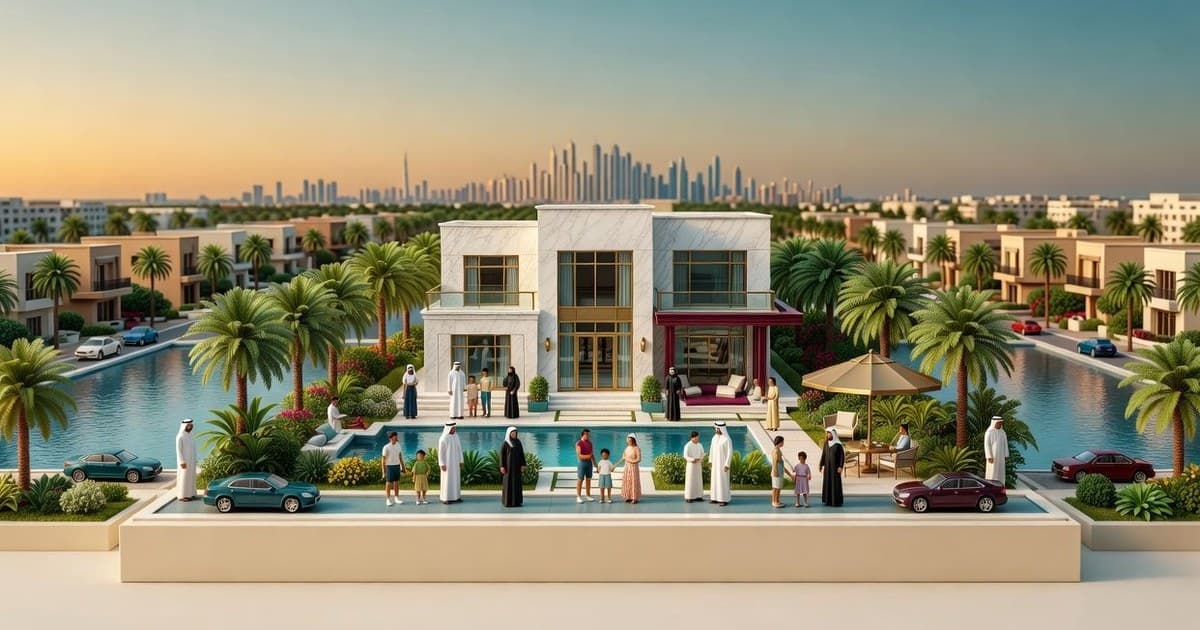
The macro call on villas is well known by now. Families and end users have been under-supplied for years, and according to the broker's read of the segment, ready villa transactions run at roughly double the off-plan volume, because people with a genuine need for space want to move in now. Limited supply plus real need has created sustained upward pressure on villas and townhouses. There is a stability layer too. In villa communities your end users are families and long term residents. In our experience they do not panic sell when sentiment wobbles, and they are not watching a yield spreadsheet every quarter, so supply stays constrained. Our view, based on the last three market cycles, is that this has been the most resilient asset class in Dubai. Where investors get it wrong is the property, not the theme. Many upcoming villa communities are more densely planned than they look, because more units per land parcel is simply more profitable for the developer. You end up with smaller plots and gardens, less built up area, less open space for parks and amenities, and sometimes apartment buildings folded into the same masterplan, which dilutes the premium appeal. That is why a community like Arabian Ranches keeps performing even where units need renovation: big plots, open space, and management people trust. The Oasis by Emaar and The Acres by Meraas sit at the other end of that scale. They are among the least dense communities coming to market, standalone villas only, no apartments or townhouses, with large plot sizes and two of the most established developers behind them. According to the broker, buyers entering today can still transact at under AED 1,800 per sq ft, at or even below what purchasers were paying in these communities over a year ago. Because the off-plan resale market is not yet held together by end users, the gap to ready comparables has widened rather than closed.
Waterfront and Expo City: selective, not blind
Coastline property carries a permanent scarcity argument. There is only a finite amount of buildable waterfront in Dubai, and waterfront is one of the most sought after asset types anywhere in the world. That protection is real, but it does not make every waterfront unit a good buy. According to our team, upcoming supply across Dubai Maritime City, Dubai Islands and Rashid Yachts & Marina is likely to reach the market in a similar window, so end user choice will not be limited. Product selection is everything. A recent example from our own dealflow: we acquired a full sea view unit at Rixos on Dubai Islands for an investor. According to the broker, the project launched some time ago and sold out, the plot is one of the strongest on the island, and the price paid was below what some new unbranded Dubai Islands launches are asking. Direct beachfront adds another layer of scarcity on top of the branding. For apartments away from the coast, Expo City is the location we keep returning to, because demand is generated inside the district rather than commuted into it. According to the broker, the exhibition centre hosts over 600 events a year, the district holds free zone status with occupiers including Nestlé, Siemens and DP World, the masterplan is government led with infrastructure already operational, and Al Maktoum International sits one metro station away. On the supply side, fewer than 3,100 units are due by 2030, which is low against that demand base. Entry is cited at under AED 1,900 per sq ft.
| Segment | Communities we are buying | Entry cited by our team | Core reason |
|---|---|---|---|
| Standalone villas | The Oasis, The Acres | Under AED 1,800 per sq ft | Low density, family end users, wide gap to ready comparables |
| Branded waterfront | Rixos, Dubai Islands | Below some new unbranded island launches | Direct beachfront scarcity, sold out project, prime plot |
| Masterplan apartments | Expo City Dubai | Under AED 1,900 per sq ft | Fewer than 3,100 units by 2030, free zone employment on site |
Your next step: a shortlist built around your cash flow
There is no one size fits all answer to the question of the best project in Dubai. Different properties serve different purposes, and your financial capability decides the cash flow you have to work with over a given period. Off-plan resale suits buyers who can make a higher initial payment to take over an existing plan, in exchange for a lower entry price than the ready market. The test never changes. Strong fundamentals. The right location. Genuine end user demand. And an entry price that gives you a measurable advantage over ready comparables rather than over another developer's brochure. If you want us to look at your budget and objectives and come back with a shortlist of off-plan resale units we would buy ourselves, book a call using the card on this page. We will show you live availability in The Oasis by Emaar, The Acres, Dubai Islands and Expo City, with the ready comparables next to them so you can see the gap for yourself. We are your feet on the ground in Dubai, from acquisition through to letting or resale.
Related questions
What exactly is an off-plan resale?
It is a unit originally bought from a developer and sold on by that owner before construction completes. You take over the remaining payment plan and the developer transfers the unit into your name once its conditions are met.
Can I use a mortgage to buy an off-plan resale?
Not a traditional mortgage in most cases, because the property is not yet handed over. That is why the buyer pool is smaller and more cash dependent, and why sellers who need a quick exit have limited options.
Why is The Oasis by Emaar on your buy list?
It is one of the least dense communities coming to market, standalone villas only, with large plots and an established developer behind it. According to the broker, entry is still available at under AED 1,800 per sq ft, at or below prices paid in the community over a year ago.
Is a discounted off-plan unit automatically a good deal?
No. A bad property with a discount is still a bad property. Many so called distressed listings come from investors who overpaid at launch, so buying below their purchase price tells you nothing about market value. Benchmark against ready comparables instead.
Should I compare an off-plan resale to other off-plan projects?
Compare it to ready stock. Ready prices reflect what people have actually paid to live somewhere, while off-plan pricing reflects what a developer is marketing. The gap between the two is the only advantage worth buying.
When does an off-plan property usually appreciate most?
A significant part of the appreciation tends to arrive close to handover, when the asset becomes tangible, bank financing becomes available and end users can finally buy it. Holding to that point is part of the strategy.
