Green Buildings in Dubai: The Question Buyers Miss

Updated November 16, 2026 · 6 min read · Sources: WHO, Harvard T.H. Chan School of Public Health COGfx study (Building and Environment, 2017), Eichholtz, Kok and Quigley (American Economic Review, 2010
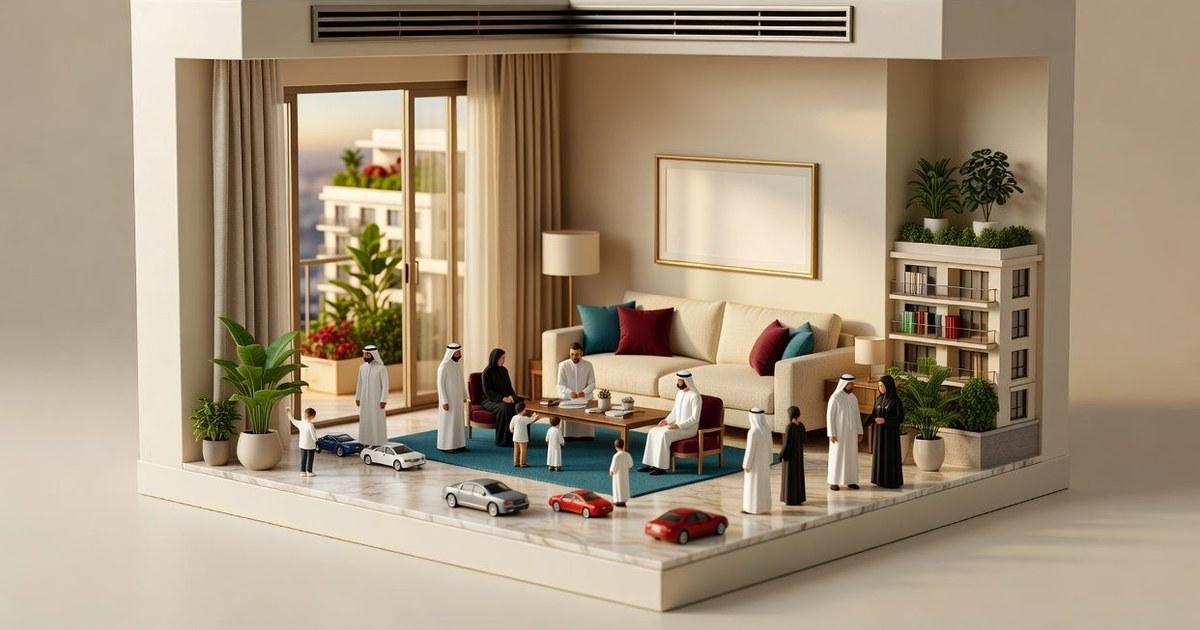
What green buildings in Dubai actually have to meet
When clients ask us about green buildings in Dubai, they usually mean solar panels and recycling. The regulatory reality is broader. Dubai Municipality's Green Building Regulations and Specifications apply to new buildings across the emirate, and Al Sa'fat, the municipality's own green building evaluation system, sets a baseline every new building must clear, with higher tiers above it. Energy, water, materials and indoor environmental quality all sit inside those requirements.
Above the baseline sit voluntary systems. LEED, run by the US Green Building Council, assesses environmental performance across several categories, one of which is indoor environmental quality. WELL, run by the International WELL Building Institute, is built specifically around occupant health. In Abu Dhabi, the Estidama Pearl Rating System, administered by the Department of Municipalities and Transport, performs a similar role for new development.
The distinction matters. A building that meets the mandatory minimum is compliant. A building certified to a higher tier, or to LEED or WELL, has been assessed against a stricter set of criteria and documented by a third party. Both are legal. Only one gives you something to point at later.
Why indoor air is a bigger issue here than most buyers assume
The UAE climate pushes life indoors for a large part of the year. Air conditioning runs almost constantly, windows stay shut, and the air you breathe at home is largely whatever your building's system delivers. In our experience, buyers interrogate the view, the gym, the kitchen appliances and the finishes, then sign without once asking how fresh air reaches the apartment.
The World Health Organization's 2014 assessment, based on 2012 data, attributed around one in eight deaths worldwide to air pollution exposure, indoor and outdoor combined. That is a global figure, not a UAE one. Anyone quoting a national share should be asked for the study, the year and the method behind it, because we have not seen a figure for the Emirates we would be comfortable repeating.
What we can say plainly is that buildings are not all designed to the same indoor air quality standards. Ventilation rates, filter grades and the emissions profile of paints, adhesives, flooring and joinery all shape the environment inside a home. Two towers on the same road, handed over the same year, can perform very differently.
What the research says about green-certified buildings
The best-known work here is the COGfx study from the Harvard T.H. Chan School of Public Health. Phase two of that research, published in the journal Building and Environment in 2017, compared office workers in green-certified buildings with those in non-certified buildings. Occupants of the certified buildings scored 26 per cent higher on cognitive function tests and reported 30 per cent fewer sick-building symptoms.
Two caveats are worth stating, because serious buyers will spot them anyway. The study looked at offices, not homes, and it was conducted outside the UAE. It is evidence that building design affects how people think and feel, not a promise about any specific Dubai tower.
Our own reading is simple. If the effect is measurable at all, it is measurable in a market where residents spend most of their day indoors with the air conditioning on. That is reason enough to make ventilation and filtration part of the viewing checklist rather than an afterthought.
The parts of a building that decide the air you breathe
Three things do most of the work. The first is fresh air supply: how much outdoor air the system brings in per person, and whether it is treated before it reaches you. The second is filtration: filters are graded, and a higher grade captures finer particles. Ask what grade is specified, where the filters sit and how often the owners association schedules changes, because a good filter left in place for two years is not a good filter.
The third is materials. Paints, sealants, adhesives, carpets and engineered wood can release volatile organic compounds, which is why low-emission material limits appear in Dubai Municipality's green building requirements and in the indoor environmental quality credits under LEED. In a new handover, this is the difference between a unit that smells of chemicals for months and one that does not.
Two more worth checking: whether kitchens and bathrooms have genuine extract ventilation rather than token vents, and whether the car park or loading bay sits below air intakes. We have walked clients through handsome apartments where the fresh air intake was positioned somewhere no one would want it.
Does certification affect value, and what does that mean off-plan?
There is published evidence of a green premium in commercial property. Eichholtz, Kok and Quigley, writing in the American Economic Review in 2010, found that green-certified office buildings in the United States commanded rents of roughly three per cent more and sale prices of around sixteen per cent more than comparable non-certified stock. That study covers US offices. It is not a UAE residential finding, and we would not present it as one.
What it does suggest is direction of travel: sustainability credentials can influence what tenants and buyers will pay. For anyone buying off-plan, that is the relevant point. Your handover date sits years out, and the market that resells or rents your unit is not today's market.
So check the dates rather than assume them. The completion date is set out in your sale and purchase agreement and in the project's escrow registration with the Dubai Land Department, and handover timelines vary widely by developer and project. Whatever that date is, ask yourself what the next cohort of buyers will be screening for. On our reading, certification and air quality specs move from nice-to-have to filter criterion well within the life of a typical off-plan purchase.
| System | Who runs it | Status in the UAE | Covers indoor air |
|---|---|---|---|
| Al Sa'fat | Dubai Municipality | Baseline for new Dubai buildings, higher tiers available | Yes, within indoor environmental quality |
| Estidama Pearl | Department of Municipalities and Transport, Abu Dhabi | Applies to new Abu Dhabi development | Yes |
| LEED | US Green Building Council | Voluntary, developer-led | Yes, indoor environmental quality category |
| WELL | International WELL Building Institute | Voluntary, health-focused | Yes, core focus |
The questions to ask before you sign
Most of this information exists. It simply never comes up, because nobody asks for it. Put the following to the sales team in writing and keep the reply. If the answer is a shrug, that is itself an answer.
Ask which rating system the building is pursuing and at which tier, and whether certification is targeted or already awarded. Ask for the mechanical specification covering fresh air and filter grades. Ask whether low-emission materials are specified for paints, adhesives and flooring. Ask who maintains the filters after handover and how that cost sits in the service charge. Ask whether the unit has openable windows or a balcony door, and how kitchen and bathroom extract is handled.
For off-plan, add one more: is the sustainability specification contractual, or marketing. Specifications can be substituted between launch and handover. If the certification target is in the brochure but not in the contract, you are relying on goodwill.
Where to start if this matters to you
We think this is the most under-asked question in the market. Buyers will spend an hour discussing cabinetry and five seconds on the system that supplies the air in every room of the home, every day, for the next decade.
If you are shortlisting projects now, send us the two or three you are weighing up. We will go back to the developers for the specification detail, flag what is contractual and what is marketing, and tell you honestly where the difference is real and where it is a logo on a brochure. We will also be straight with you about where it is not worth paying more.
Book a consultation using the card on this page and we will take your shortlist apart with you, floor by floor.
Related questions
How do I know if a Dubai building is certified green?
Ask the developer or the owners association for the certificate itself, naming the system and the tier, and whether it has been awarded or only targeted. New Dubai buildings must meet Dubai Municipality's green building requirements, so compliance alone does not make a tower exceptional. A LEED, WELL or higher Al Sa'fat tier is the point of difference.
Does a green rating guarantee good indoor air quality in my apartment?
No. Rating systems assess the building at design and construction stage. Day to day air quality also depends on how the system is run after handover, particularly filter maintenance, which sits with the owners association. Ask about the maintenance schedule as well as the certificate.
Will a green-certified home be worth more when I resell?
There is published evidence of rent and price premiums for green-certified offices in the United States, from Eichholtz, Kok and Quigley in the American Economic Review, 2010. That is not a UAE residential study, so treat it as directional. Our view is that certification and air quality specs will matter more to buyers at your handover date than they do today.
What should I ask about air filtration specifically?
Ask for the filter grade specified in the mechanical drawings, where the filters are located, how often they are replaced and whether that cost is inside the service charge. Also ask where the fresh air intake sits relative to car parks, loading bays and exhaust outlets.
Is this only relevant for off-plan buyers?
No, but off-plan buyers have more leverage. Before handover you can push for the sustainability specification to be contractual rather than promotional. On a ready property, you are inspecting what already exists, so ask the owners association for the maintenance records.