WELL Certified Office Buildings in Dubai: An Investor Guide

Updated November 16, 2026 · 7 min read · Sources: International WELL Building Institute, US Green Building Council, Dubai Municipality
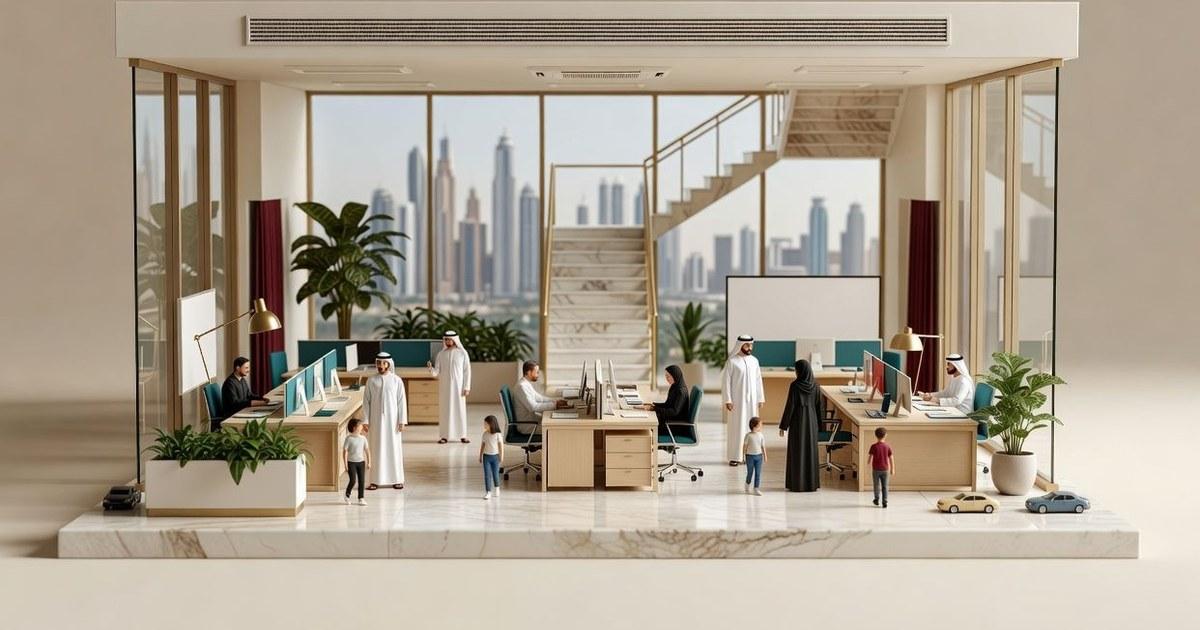
What WELL certified office buildings in Dubai actually are
WELL certified office buildings in Dubai are offices that have been measured against the WELL Building Standard, published and administered by the International WELL Building Institute. The standard is not about how the reception looks. It is about what the building does to the people inside it for eight or nine hours a day: the air they breathe, the daylight they get, the noise they sit in and how easy it is to move during the working day.
It helps to separate the three ratings an occupier is likely to hear about in this market. LEED, run by the US Green Building Council, is primarily an environmental and energy rating. Al Sa'fat, the Dubai Municipality green building system, sets local requirements and tiers for new development in the emirate. WELL sits alongside both and looks at human health and performance. A building can hold more than one. They answer different questions.
The practical difference for a buyer is verification. WELL is performance based, which means on site testing of things such as air and water quality, not just a set of drawings and specifications signed off at design stage. That is the part that matters when you are asked to pay a premium for a floor described as a wellness building. There is a difference between a building with a yoga room and a building that has been tested.
The ten concepts a building is scored on
WELL v2 organises the standard into ten concepts, each with preconditions that every project must meet and optimisations that earn points. The concepts are where the broker language about wellbeing design turns into something a surveyor can check.
When we walk clients through a floor, this table is roughly the order of questions we ask. Most of it is base build, which is why the landlord's position on certification matters more than the fit out budget.
| Concept | What it covers | What to look for on a viewing |
|---|---|---|
| Air | Ventilation, filtration, source control | Filter grade, fresh air rates, CO2 monitoring, smoking policy |
| Water | Quality, testing, access to drinking water | Testing records, filtration, dispenser locations |
| Nourishment | Food quality and availability on site | Pantry provision, food offer in the building |
| Light | Daylight access, glare control, electric lighting quality | Floor plate depth, glazing, shading, circadian lighting |
| Movement | Active design and physical activity | Visible stairs, cycle storage, showers, fitness space |
| Thermal comfort | Temperature control and individual control | Zoning, local control, humidity management |
| Sound | Acoustic design and noise control | Reverberation, partition performance, plant noise, masking |
| Materials | Restriction of hazardous materials | Low emission paints, adhesives and flooring in the fit out |
| Mind | Restorative design and mental health support | Quiet rooms, biophilic planting, views out, recovery spaces |
| Community | Inclusive design, health services, emergency readiness |
The four award levels, and what WELL Core means for a landlord
WELL v2 awards four levels. Every project must meet all preconditions, then collect points from the optimisations across the ten concepts. The levels are cumulative, so a Gold building has cleared the Silver and Bronze thresholds on its way through.
For investors, the version to understand is WELL Core. That pathway certifies the base building and common areas, the parts a landlord controls: central plant, ventilation, glazing, lobbies, cores, stairs and amenity. A tenant can then fit out and pursue certification for their own space with much of the hard work already done. If you are buying a whole floor to let, WELL Core on the building is the asset level feature. A tenant's own certificate goes with the tenant.
| Award level | Points required under WELL v2 |
|---|---|
| Bronze | 40 |
| Silver | 50 |
| Gold | 60 |
| Platinum | 80 |
Why occupiers are starting to ask about this
Estimates of what burnout and lost productivity cost employers circulate widely, and the figures move a great deal with the study, the market and the method used. We do not repeat a number here without naming the research behind it, and we would tell any client to ask for the same before they build it into a model.
The judgement we are comfortable making is our own, and it is this: for most office occupiers in Dubai, the rent line is a small fraction of the payroll line. A business paying for a floor is paying far more for the people on it. That asymmetry is why a building that quietly improves concentration, sleep quality and sick days is an operational question, not a decorative one. The cost that worries us is not the empty desk. It is the full desk on a slow afternoon in a stuffy, noisy, windowless room.
We also see the brief changing. In the enquiries we handle, more occupiers now ask about fresh air rates, acoustic separation, daylight on the floor plate and end of trip facilities, where two or three years ago the questions stopped at the lobby, the finishes and the service charge. That is our observation of our own pipeline rather than a market statistic. Anyone underwriting on it should test it against their own letting evidence and against published research from the major consultancies covering the UAE office market.
What this means if you are buying an off-plan office
An off-plan office bought today will be let to businesses hiring in a market we cannot fully see. On our reading, the sensible way to underwrite is to ask what a demanding occupier will expect as standard by the time the building stabilises, not what looks impressive in a show suite now.
Certain features are expensive or impossible to retrofit. Floor to ceiling height, floor plate depth and glazing determine how much daylight reaches the middle of a floor. Riser capacity and the central plant determine whether fresh air rates and filtration can be upgraded later. Structural separation and slab to slab build up determine what you can do about noise. Planting, quiet rooms, showers and bike racks can be added. The bones cannot.
So the questions we put to a developer are specific. Is WELL Core being targeted, and at what level. What is the design fresh air rate and the filter specification. What is the daylight factor at the deepest point of the floor plate. What acoustic performance is specified between demises and from the plant. Is there end of trip provision, and how many people does it serve. A developer who is genuinely building to this standard answers in numbers. One who is not answers in adjectives.
Whether that translates into higher rent or faster letting in Dubai is still an open question, and we treat it as one. What we will say is that the downside looks limited. A building with better air, better light and better acoustics is easier to let in a soft market and cheaper for a tenant to certify in a strong one.
How to verify a certification claim before you sign
Marketing language is not certification. The word wellness carries no definition and no audit. WELL, LEED and Al Sa'fat all do, and all three can be checked.
Ask for the certificate itself, then check five things. First, the scheme and version, for example WELL v2. Second, the pathway: WELL Core for the base building, or a certification covering only one tenant's interior. Third, the award level. Fourth, the exact scope, meaning which floors and which areas are covered. Fifth, the issue date, because WELL certification is time limited and requires recertification, so an old certificate on a building that has changed hands and changed plant tells you less than it appears to.
The International WELL Building Institute publishes a public directory of certified and registered projects, which is the first place to confirm a claim independently. For the environmental side, the US Green Building Council maintains the same for LEED, and Dubai Municipality sets the Al Sa'fat requirements that apply to new buildings in the emirate. If a building appears in none of them, treat the brochure as a description of intent.
Your next step
If you are weighing an off-plan office floor or a stabilised commercial asset, the useful exercise is to put the building's claims next to its drawings and its certificates, and see whether they agree. That is a short conversation, and it usually saves a long one later.
We will go through the specification with you, tell you which features are base build and which you can add, and set out what we think a tenant will be asking for by the time your lease is being negotiated. Book a call using the card on this page and we will come to it with the questions already written down.
Related questions
Is WELL certification the same as LEED?
No. LEED, run by the US Green Building Council, is mainly an environmental and energy rating. WELL, run by the International WELL Building Institute, scores the building on human health criteria such as air, water, light, sound and movement. A building can hold both, and in Dubai it may also sit under the Dubai Municipality Al Sa'fat green building system.
Can my office be WELL certified if the whole building is not?
Yes. A tenant can certify their own fitted space. It is simpler and usually cheaper where the landlord has already achieved WELL Core on the base building and common areas, because the central plant, ventilation and amenity are already assessed.
What are the WELL certification levels?
Under WELL v2 there are four: Bronze at 40 points, Silver at 50, Gold at 60 and Platinum at 80. All preconditions must be met before any points count.
Does a WELL certified office command higher rent in Dubai?
There is no published UAE figure we would stand behind, so we would not underwrite a premium on it. Our view is that the case rests on easier letting, better tenant retention and lower certification cost for the occupier, and that any rental uplift should be tested against your own comparable evidence.
How long does WELL certification last?
It is time limited and requires recertification, so always ask for the issue date as well as the level. Confirm the project in the International WELL Building Institute's public directory rather than relying on a brochure.
Which features should I prioritise in an off-plan office?
The ones you cannot retrofit: floor to ceiling height, floor plate depth and glazing for daylight, riser and plant capacity for fresh air and filtration, and the acoustic build up between demises. Planting, quiet rooms, showers and cycle storage can be added later.