Renting in Dubai and Abu Dhabi: The Complete Guide

Updated October 19, 2026 · 6 min read · Sources: RERA rental index, registered Ejari contracts, Law No. 26 of 2007 as amended, DEWA (housing fee), UAE Government portal u.ae, ADDC (municipality fee).
What a tenancy actually costs upfront
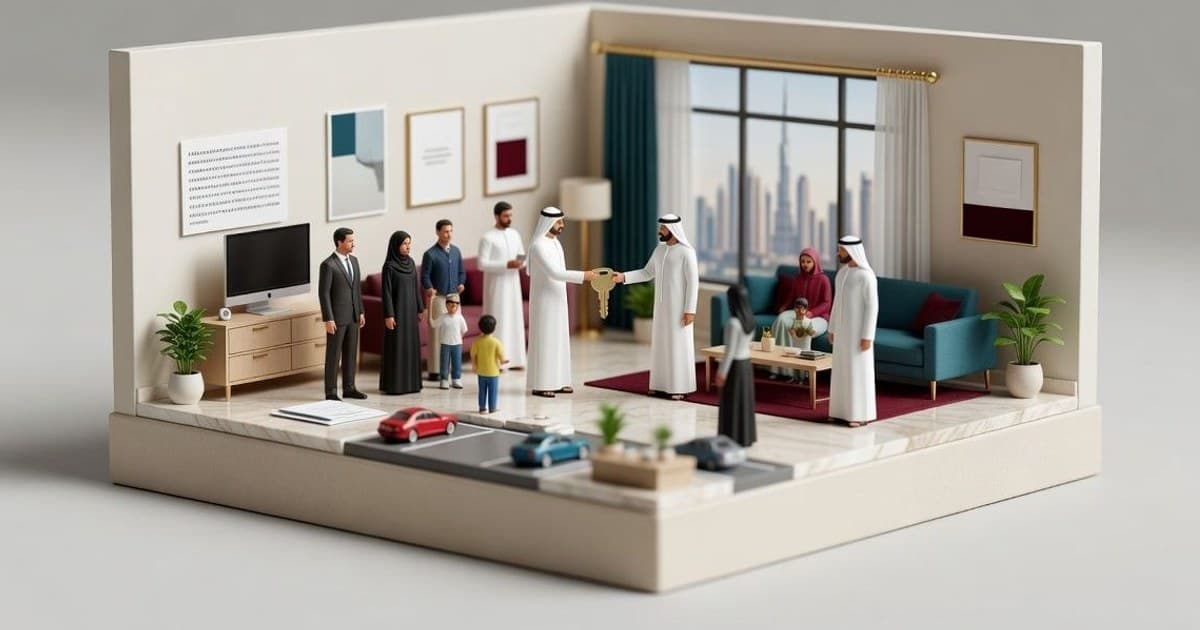
Beyond the rent itself, budget for a security deposit of 5% of the annual rent unfurnished or 10% furnished, agency commission of 5% plus VAT, and the Ejari registration fee of around AED 220. DEWA takes a refundable connection deposit of roughly AED 2,000 for an apartment or AED 4,000 for a villa, and buildings on district cooling take a separate chiller deposit.
The cheque structure matters as much as the headline figure. Paying in one cheque typically buys 3% to 5% off the asking rent because the landlord carries no collection risk, while four or six cheques costs that same margin. Decide which side of that trade you want before you view, because it changes which properties are worth seeing.

Renewals, increases and the rent index
A landlord cannot raise the rent at will. Any increase must follow the RERA rental index and must be served in writing at least 90 days before the renewal date. If the current rent is within 10% of the index average for similar homes in the area, no increase is allowed at all. Below that the permitted rise steps up through 5%, 10% and 15%, to a maximum of 20% where the rent sits more than 40% under the average.
Notice served late is not valid, and a rent rise on a renewal never notified is not enforceable. Disputes go to the Rental Dispute Centre, and the filing fee is a fraction of a year’s over-payment.
What Ejari is, and why it matters
Ejari is the Dubai Land Department system that registers a tenancy contract. It is mandatory, and the certificate is needed for DEWA connection, for a residence visa application or renewal, and for school registration. Registration is normally arranged by the agent or landlord at signing. Abu Dhabi runs the equivalent system under Tawtheeq.
Can a landlord evict a tenant at the end of the term
Only on the grounds set out in the tenancy law, and only with 12 months notice served through a notary public or registered post. The main grounds are that the owner wants to sell, or that the owner or a first-degree relative intends to move in. Wanting a higher rent is not a ground for eviction, and a new owner buying the property does not cancel an existing contract.
The housing fee on your DEWA bill
The cost new tenants in Dubai most often miss is the Dubai Municipality housing fee. It is 5% of your annual rent, it is charged to the tenant, and it is collected through your DEWA account, so it arrives as a line on the utility bill rather than as a payment at signing. On a rent of AED 100,000 a year that is AED 5,000, or about AED 417 a month on top of electricity, water and any cooling charges. Budget for it from the first bill: it is not usually among the upfront figures an agent quotes, and it runs for the whole tenancy. Abu Dhabi works the same way in principle. Tenants who are not UAE nationals pay a municipality fee on the tenancy, worked out on the annual rent and collected through the utility bill. Published rates differ, so confirm the rate with the utility when you connect rather than relying on a figure from a listing or a forum.
A worked example: the cash to sign a lease
Put together, the costs above mean the first rent cheque is only part of the money needed on signing day. Take an unfurnished Dubai apartment at AED 100,000 a year, paid in four cheques. On signing you hand over the first cheque of AED 25,000, a security deposit of AED 5,000, agency commission of AED 5,250 including VAT and about AED 220 for Ejari, then pay a DEWA deposit of AED 2,000 when you connect. That is about AED 37,470 before you move in, of which AED 7,000 is refundable deposits. Across the first year the non-refundable cost comes to about AED 110,470: the rent, the commission, Ejari and the AED 5,000 housing fee, before electricity, water and any chiller charges. Paying in one cheque changes the first figure, not the shape: the full AED 100,000 falls due on signing, against the 3% to 5% saving discussed above. Run the same sum before you view, with the rent and cheque structure you can actually manage, so the shortlist only holds homes you can move into.
| Item | When | AED |
|---|---|---|
| First rent cheque (1 of 4) | Signing | 25,000 |
| Security deposit, 5% (refundable) | Signing | 5,000 |
| Agency commission, 5% + VAT | Signing | 5,250 |
| Ejari registration | Signing | about 220 |
| DEWA deposit (refundable) | Connection | 2,000 |
| Cash before moving in | Total | about 37,470 |
| Housing fee, 5% of rent | Through the DEWA bill | 5,000 a year |
Renting against buying
Rents vary more by building than by community, particularly on service quality and cooling charges, so a community average is a starting point rather than an answer. If weighing a tenancy against a purchase, the deciding factor is normally how long you plan to stay rather than the monthly comparison: three years or less and renting almost always wins once purchase costs are counted.
Related questions
How much can my landlord raise the rent?
Only by the amount the RERA rental index allows, and only with 90 days written notice before the renewal date. No increase is permitted while you are within 10% of the area average, then the cap steps up through 5%, 10%, 15% and a maximum of 20% for rents more than 40% below the average.
What are the upfront costs of renting?
Expect the first rent cheque, a security deposit of 5% for an unfurnished home or 10% furnished, agency commission of 5% of the annual rent plus VAT, and the Ejari registration fee of about AED 220. Add DEWA connection (AED 2,000 to 4,000 refundable deposit) and a chiller deposit in buildings on district cooling.
What is Ejari and do I need it?
Ejari is the Dubai Land Department system that registers your tenancy contract. It is mandatory, and you need the certificate for DEWA connection, for a residence visa application or renewal, and for school registration. Abu Dhabi runs the equivalent system under Tawtheeq.
How many cheques will I need to pay in?
One to four is normal, occasionally six or twelve on newer stock. Fewer cheques usually buys a lower rent: a single-cheque tenant can often negotiate 3% to 5% off the asking rent, because the landlord avoids the collection risk.
Can my landlord evict me at the end of the term?
Only on the grounds set out in the tenancy law, and only with 12 months notice served through a notary public or registered post. The main grounds are that the owner wants to sell, or that the owner or a first-degree relative intends to move in.
What is the housing fee on my DEWA bill?
It is the Dubai Municipality housing fee: 5% of your annual rent, charged to the tenant and collected through your DEWA bill. On a rent of AED 100,000 that is AED 5,000 a year, or about AED 417 a month. In Abu Dhabi, tenants who are not UAE nationals pay a municipality fee on the tenancy through the utility bill instead.